
Understanding Craniopharyngioma Brain Tumors
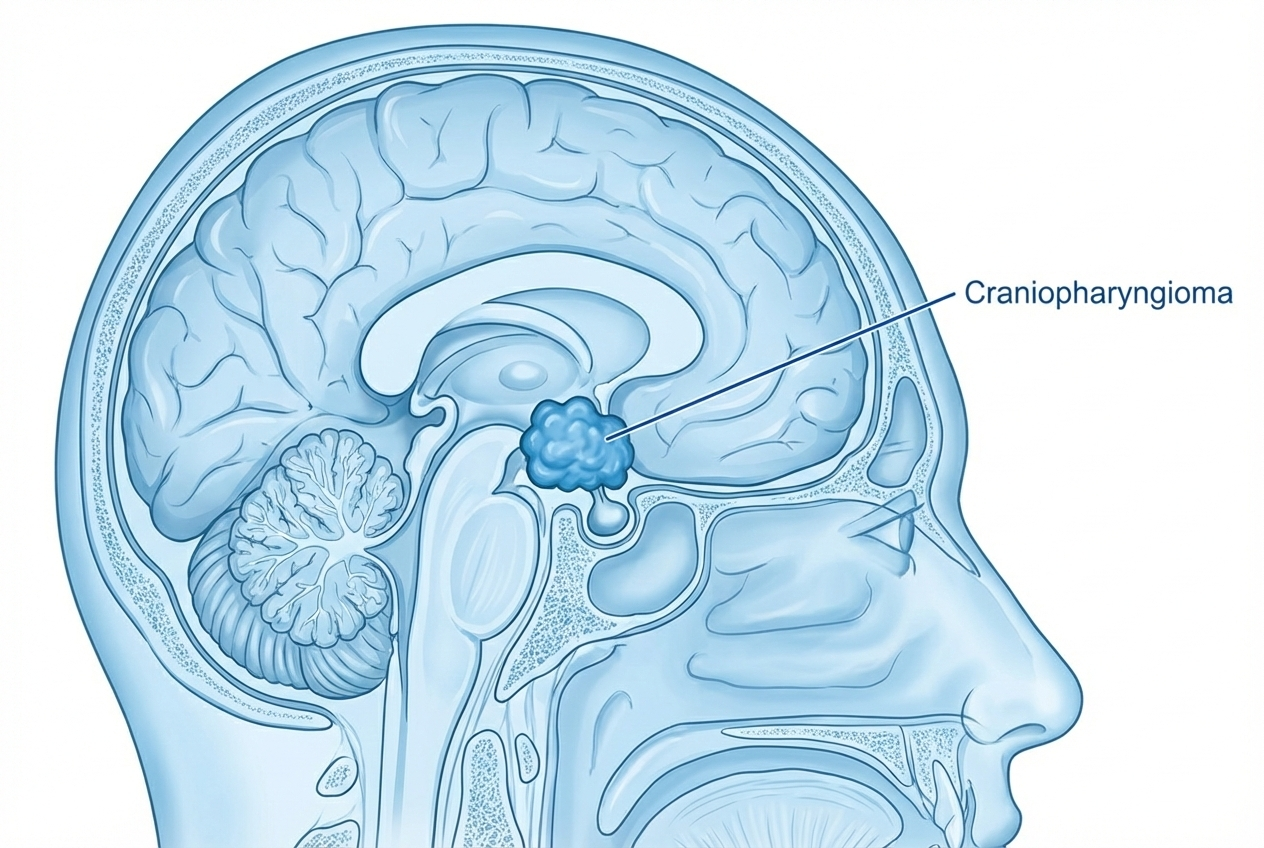
A Craniopharyngioma is a rare, typically benign (non-cancerous) brain tumor that develops near the pituitary gland and hypothalamus — regions responsible for hormone control, growth, and metabolism.
Although not malignant, craniopharyngiomas can grow slowly and press on important brain structures, causing hormonal and vision-related problems. They are most common in children and young adults, but can occur at any age.
Common Symptoms of Craniopharyngioma
Symptoms often develop gradually and depend on the size and direction of tumor growth:
- Persistent headaches
- Gradual loss of vision or double vision
- Hormonal imbalances (such as growth delay or fatigue)
- Excessive thirst or frequent urination (due to diabetes insipidus)
- Nausea or vomiting from increased intracranial pressure
- Behavioral or memory changes
Diagnosis
Diagnosis begins with a detailed neurological and endocrinological evaluation. Imaging studies like MRI and CT scans help identify the tumor’s size, location, and its relationship to the pituitary gland and optic nerves. Hormone blood tests are also performed to assess pituitary function.
Treatment Options
The goal of treatment is to remove or control the tumor while preserving hormonal and visual function:
- Microsurgical or Endoscopic Resection: Minimally invasive removal through transcranial or transnasal (endonasal) routes.
- Neuronavigation & Intraoperative Monitoring: Used for safe and precise tumor excision.
- Radiation Therapy: Considered when total removal is unsafe or for residual/recurrent tumors.
- Hormone Replacement Therapy: To manage pituitary dysfunction caused by the tumor or its treatment.
Expert Craniopharyngioma Management in Ahmedabad
At HCG Aastha Cancer Centre, Ahmedabad, Dr. Chirag Panchal offers advanced, patient-centered care for craniopharyngiomas. His expertise in microneurosurgery, neuroendoscopy, and neuronavigation-guided surgery ensures precise tumor removal while protecting critical structures.
Recovery & Follow-up
- Close monitoring of hormonal balance and vision recovery
- Regular MRI scans to check for recurrence
- Periodic endocrinological assessments for pituitary function
When to Seek Medical Help
- Unexplained visual changes
- Excessive thirst or frequent urination
- Growth or hormonal abnormalities
