
Understanding Spinal Cord Tumors
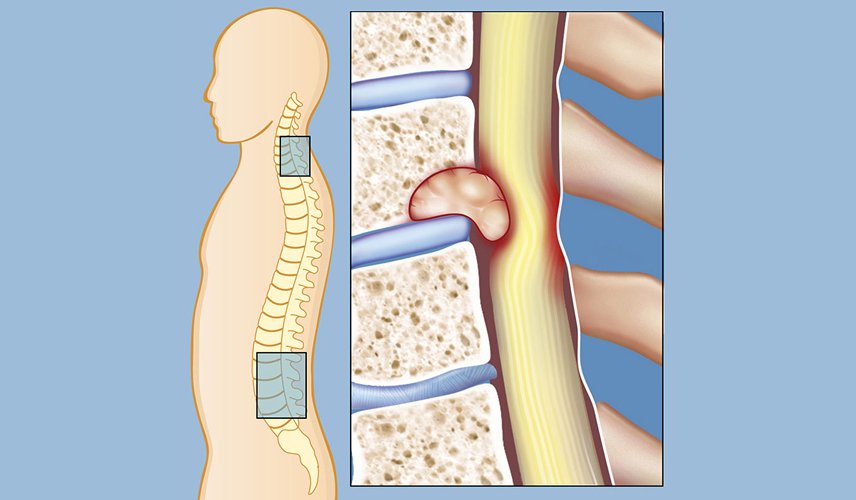
A spinal cord tumor is an abnormal growth of cells within or surrounding the spinal cord. These tumors can be benign (non-cancerous) or malignant (cancerous), and can affect the spinal cord, nerve roots, or the bones and tissues around it.
Spinal tumors can occur at any level of the spine — cervical, thoracic, lumbar, or sacral — and may compress the spinal cord or nerves, leading to neurological symptoms.
Types of Spinal Cord Tumors
- Intramedullary Tumors: Arise within the spinal cord itself (e.g., ependymoma, astrocytoma).
- Intradural-Extramedullary Tumors: Develop inside the dura (the spinal covering) but outside the spinal cord (e.g., meningioma, schwannoma).
- Extradural Tumors: Occur outside the dura, often originating from vertebral bones (e.g., metastases).
Common Symptoms
Symptoms usually develop gradually but may worsen as the tumor grows and compresses the spinal cord or nerves:
- Persistent back or neck pain
- Pain radiating to arms or legs
- Weakness or numbness in limbs
- Loss of balance or coordination
- Bladder or bowel control problems
- Difficulty walking or standing
Causes and Risk Factors
The exact cause of spinal cord tumors is not always known. However, some are associated with genetic conditions such as Neurofibromatosis type 2 (NF2) or Von Hippel–Lindau disease (VHL). Previous radiation exposure may also increase risk in rare cases.
Diagnosis
Early diagnosis is crucial to prevent irreversible spinal cord damage. Diagnostic methods include:
- MRI with contrast: The most accurate imaging test to locate and characterize spinal cord tumors.
- CT scan: Useful for assessing bone involvement or tumor spread.
- Biopsy: May be required to determine tumor type before treatment.
Treatment Options
The choice of treatment depends on the tumor’s type, size, and location, as well as the patient’s overall health. Common treatments include:
- Microsurgical Removal: Advanced surgical techniques allow precise tumor excision while minimizing damage to the spinal cord.
- Neuronavigation & Neurophysiological Monitoring: Used to enhance safety and preserve neurological function during surgery.
- Radiation Therapy: Often recommended after surgery for residual or malignant tumors.
- Stereotactic Radiosurgery: Non-invasive, focused radiation for small or inoperable lesions.
- Chemotherapy: Occasionally used for malignant or metastatic spinal tumors.
Advanced Spinal Tumor Management in Ahmedabad
At HCG Aastha Cancer Centre, Ahmedabad, Dr. Chirag Panchal, Consultant Neurosurgeon, provides comprehensive management of spinal cord tumors using advanced microsurgical and minimally invasive techniques. With state-of-the-art intraoperative monitoring, neuronavigation, and endoscopic approaches, patients receive safe and effective treatment with optimal neurological outcomes.
When to Seek Medical Help
- Progressive back or neck pain
- Weakness or numbness in arms or legs
- Loss of balance or coordination
- Bladder or bowel control issues
Early detection and treatment of spinal cord tumors can significantly improve recovery and help prevent permanent neurological damage.
